
Written work · Essential works
The Voice of the Silence
The Voice of the Silence, being Chosen Fragments from the «Book of the Golden Precepts»
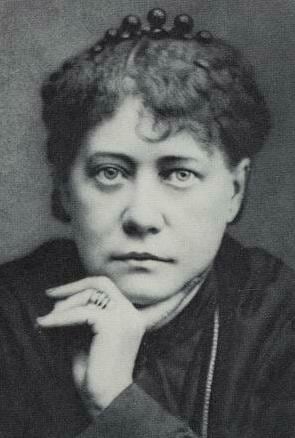
A short prose poem on the spiritual path, in three fragments: 'The Voice of the Silence', 'The Two Paths' and 'The Seven Portals'. It teaches the stilling of the mind ('the mind is the great slayer of the real'), the passage through the three halls of ignorance, learning and wisdom, and the choice between the path of personal liberation and the path of renunciation, that of the bodhisattva who remains to help others. It is the devotional text of Theosophy par excellence and one of the first to bring the Mahayana ethic of compassion to a Western public; the 14th Dalai Lama wrote a foreword to a centenary edition.
What it is about
The Voice of the Silence is Blavatsky's shortest book and, for many readers, her most beautiful. Against the overflowing erudition of Isis Unveiled and The Secret Doctrine, there is neither polemic nor cosmology here: only instructions addressed to a disciple, in rhythmic, solemn and at times dazzling prose that moves between aphorism, litany and dialogue between master and pupil.
Blavatsky presented it as a translation of fragments from the "Book of the Golden Precepts", a collection of some ninety small treatises which, according to the preface, were put into the hands of mystic students in the East, thirty-nine of which she claimed to have learned by heart. No original has ever been found, and scholars regard it as her own composition, nourished by Mahayana Buddhist reading, by the Jñāneśvarī — the great Marathi commentary on the Bhagavad Gita, which she cites in the preface — and by her familiarity with Tibetan vocabulary. That does not diminish its interest: it is probably the first widely circulated text in the West to present as a spiritual ideal the bodhisattva, who renounces personal liberation in order to help others.
The work has three fragments. The first, which gives the book its title, teaches the stilling of the senses and the mind until one hears the "voice of the silence", that is, one's own inner self; it describes three halls — of ignorance, of learning and of wisdom — through which the pilgrim must pass, and warns against the "heresy of separateness". The second, "The Two Paths", sets the "doctrine of the eye", intellectual and exoteric knowledge, against the "doctrine of the heart", inner wisdom; and the "open path", leading to individual liberation, against the "secret path" of compassionate renunciation. The third, "The Seven Portals", goes through the transcendent virtues — charity, harmony, patience, dispassion, energy, contemplation and wisdom — as successive keys to enlightenment.
The thread running through the whole book is compassion. The "law of laws", says the third fragment, is not an attribute but the eternal harmony of the universe. Hence its lasting appeal: it is an ethic of self-giving rather than a doctrine, and it can be read with profit without accepting the rest of the Theosophical system. That is why it has been, for more than a century, the Theosophists' bedside book and one of the nineteenth-century spiritual texts that has kept finding readers outside the movement.
Authorship note
Blavatsky presents it as a translation of fragments from the 'Book of the Golden Precepts', which she said she had memorised in the East. No original is known; scholars regard it as her own composition inspired by Mahayana Buddhist sources. The 9th Panchen Lama had it reissued in Peking in 1927 with a note of appreciation.
Context of composition
Blavatsky wrote the book in the summer of 1889 at Fontainebleau, where she was spending a few weeks' rest; Annie Besant, who had just joined the Theosophical Society, was with her and later recounted that she watched her write it swiftly, almost without corrections. It was the year in which the author was organising the Esoteric Section, the Society's inner circle devoted to practice, and the book was conceived for that audience: not for the curious but, as the preface says, for the few true mystics of the movement. After two works devoted to doctrine, Blavatsky wanted to offer a guide to inner conduct. It was published in London that same year, in a small-format volume meant to be carried about, with endnotes explaining the Sanskrit and Tibetan terms. The timing matters: Blavatsky had spent four years defending herself against the charge of fraud and had resolved that her legacy would be not phenomena but an inner discipline; The Voice of the Silence is the purest expression of that turn.
Structure
- 01
Preface
Blavatsky introduces the "Book of the Golden Precepts", its common origin with the Stanzas of Dzyan, its kinship with the *Jñāneśvarī* and the Upanishads, and explains that she has selected only the treatises useful to the "few real mystics" of the Society.
- 02
Fragment I: "The Voice of the Silence"
The pupil must grow indifferent to the objects of the senses and master the mind, "the great Slayer of the Real". The three halls — ignorance, learning, wisdom — and the seven mystic sounds mark the way to hearing the inner voice and becoming one with it.
- 03
Fragment II: "The Two Paths"
A dialogue between disciple and master. It distinguishes the doctrine of the eye from that of the heart, and the open path, leading to personal nirvana, from the secret path of those who renounce it out of compassion. It rejects both inaction and attachment to the fruits of action.
- 04
Fragment III: "The Seven Portals"
The seven keys — dāna, śīla, kṣānti, virāga, vīrya, dhyāna and prajñā — are passed one by one as successive gates. The fragment culminates in the bodhisattva's renunciation and closes with the formula "Peace to all beings".
Main themes
The silence of the mind
The practice the book proposes begins by withdrawing attention from the senses and recognising that the mind, which produces the images of the world, is also what hides the real. "Slaying the slayer" does not mean destroying intelligence but ceasing to identify with the stream of thoughts. It is the same insight that runs through classical yoga and Buddhist meditation.
The bodhisattva ideal
The heart of the book is the choice between two goals: one's own liberation, legitimate but solitary, and the renunciation of it in order to remain in the service of those who suffer. Blavatsky calls the latter the "secret path" and presents it as the highest. For many Westerners it was their first encounter with this Mahayana ideal.
The transcendent virtues
The seven portals rework the *pāramitās* of Mahayana Buddhism, which tradition usually counts as six or ten, adding dispassion and harmony of conduct. Far from being a list of rules, the book describes them as successive transformations of character, each preparing the next.
Against separateness
The "great heresy" is to believe oneself separate from others and from the whole. From this follows the book's ethic: spiritual progress that is not shared is illusory, and the pain of others must enter the disciple as light enters the lotus. Universal brotherhood, the Theosophical Society's first object, here receives its inner foundation.
Compassion as law
The book raises compassion from a feeling to a cosmic principle: it is not a quality one has but the harmony that sustains all things. This reading joins Buddhist ethics to the metaphysics of *The Secret Doctrine*, and explains why the work is at once the author's most practical and most mystical.
Key passages
«The Mind is the great Slayer of the Real. Let the Disciple slay the Slayer.»
The Mind is the great Slayer of the Real. Let the Disciple slay the Slayer.
The book's most quoted line. It gathers a teaching common to yoga and Buddhism: the mind that discriminates and names is what manufactures the illusion of a separate world. The Spanish rendering is our own.
«Thou canst not travel on the Path before thou hast become that Path itself.»
Thou canst not travel on the Path before thou hast become that Path itself.
A paradox with mystical roots: the spiritual path is not an outward route to be travelled but a transformation of the traveller. Means and end coincide.
«Let thy Soul lend its ear to every cry of pain like as the lotus bares its heart to drink the morning sun.»
Let thy Soul lend its ear to every cry of pain like as the lotus bares its heart to drink the morning sun.
Compassion as openness, not as effort. The image of the lotus, which blossoms toward the light while still rising from the mud, condenses the bodhisattva ideal the book goes on to develop.
«Compassion is no attribute. It is the LAW of laws — eternal Harmony, Alaya's SELF; a shoreless universal essence.»
Compassion is no attribute. It is the LAW of LAWS — eternal Harmony, Alaya's SELF; a shoreless universal essence, the light of everlasting Right, and fitness of all things, the law of love eternal.
The book's doctrinal climax. Alaya here is the world-soul: compassion ceases to be a human feeling and becomes the very order of the universe.
Reception and influence
From its publication, The Voice of the Silence was the Theosophists' devotional book and one of their most frequently reissued texts. Its reception among Buddhists is unusual. In 1927 the Ninth Panchen Lama supported a reprint in Peking, issued by the Chinese Buddhist Research Society, with a few lines in his own hand; and the Japanese scholar D. T. Suzuki, whose wife Beatrice Lane was a Theosophist, praised it, as Theosophical sources report, as a genuine expression of the Mahayana spirit. In 1989 a centenary edition appeared with a foreword by the Fourteenth Dalai Lama. These gestures do not settle the question of its origin — specialists still consider it Blavatsky's work — but they show that its ethic was recognised by the tradition it claimed to transmit.
The book circulated widely in India and the West in pocket editions. The various Theosophical branches keep their own editions, sometimes with differences in punctuation and notes, and the Theosophical University Press in Pasadena publishes a verbatim edition of the 1889 text. It has been translated into dozens of languages; in Spanish it has been published by, among others, Kier in Buenos Aires and Sirio and Edaf in Spain. Outside the movement its formulas — "the mind is the great slayer of the real" — have passed into anthologies of spirituality without many readers knowing where they come from.
How to read it
It can be read in an afternoon, but yields far more read slowly, one fragment at a time and aloud: it is prose for the ear. Do not skip the preface, which explains the claimed origin, nor the endnotes, which clarify the Sanskrit and Tibetan terms. Readers unfamiliar with Mahayana Buddhism will gain much from first reading something on the *pāramitās* or the bodhisattva vow, so as to tell the traditional from what is Blavatsky's own. The Theosophical University Press verbatim edition reproduces the 1889 text and is available online.
Editions and translations
Editions in your language first, without hiding the others. Each with its cover and its store.
English

The Voice of the Silence
Theosophical Publishing House / Quest, 1992
ISBN 9780835606813

The Voice of the Silence
Theosophical University Press, Pasadena, 1992
ISBN 9780911500059
Edición verbatim; también 9780911500042 (1987). Texto íntegro en línea.

The Voice of the Silence
Concord Grove Press, Santa Bárbara, 1989
ISBN 9780886950460
Edición del centenario con prólogo del XIV Dalái Lama.
Helena Blavatsky
The Voice of the Silence
The Conscious LibraryThe Voice of the Silence
Theosophical Publishing Company, Londres, 1889
Primera edición; facsímil en PDF en theosociety.org.
Deutsch
Helena Blavatsky
Die Stimme der Stille
The Conscious LibraryDie Stimme der Stille
Theosophical University Press, 1993
ISBN 9780911500950
Traducción alemana publicada por TUP (Open Library la registra con lengua «eng»).
Español

La voz del silencio
Editorial Kier, Buenos Aires, 1993
ISBN 9789501708073
Helena Blavatsky
La voz del silencio
The Conscious LibraryLa voz del silencio
Edaf, Madrid, 2003
ISBN 9788441412279

La voz del silencio
Editorial Sirio, Málaga, 2004
ISBN 9788478081288
Further reading
- The Secret Doctrine
The author ascribes both books to the same origin; there lies the cosmology, here the ethic that follows from it.
- At the Feet of the Master
The other great Theosophical breviary of inner conduct, written twenty years later in the circle of Besant and Leadbeater.
- Dhammapada
To compare Blavatsky's aphorisms with the ancient Buddhist tradition of sayings on mind and conduct.
Other works by Helena Blavatsky
- Isis Unveiled · 1877
- The Secret Doctrine · 1888
- The Key to Theosophy · 1889
- The Theosophical Glossary · 1892
- From the Caves and Jungles of Hindostan · 1879
- Nightmare Tales · 1892
- Studies in Occultism · 1895
- A Modern Panarion · 1895
- Collected Writings · 1950
- Esoteric Instructions · 1889
- Gems from the East · 1890
- Transactions of the Blavatsky Lodge · 1890
- The Letters of H. P. Blavatsky to A. P. Sinnett · 1925
- The Letters of H. P. Blavatsky, vol. 1 · 2003
- The Durbar in Lahore · 1881
- The Secret Doctrine, Volume III · 1897
- The People of the Blue Mountains · 1883
- Some Unpublished Letters of Helena Petrovna Blavatsky · 1929
- Five Messages to the American Theosophists · 1888
- The Original Programme of the Theosophical Society · 1931
- Practical Occultism · 1888
- Raja-Yoga, or Occultism · 1931
- Dynamics of the Psychic World · 1972
- Personal Memoirs of H. P. Blavatsky · 1937
- H. P. B. Speaks · 1950
- The Inner Group Teachings of H. P. Blavatsky · 1985
- The Esoteric Character of the Gospels · 1887
- Theosophical Articles · 1982
Sources
- Open Library, autora H. P. Blavatsky (OL2889852A): registros de obras y ediciones con ISBN consultados el 2026-10-22.
- H. P. Blavatsky, *The Voice of the Silence, being Chosen Fragments from the «Book of the Golden Precepts»*, Londres, The Theosophical Publishing Company, 1889 (ed. literal, Pasadena, Theosophical University Press, 1992; texto en theosociety.org).
- H. P. Blavatsky, *The Voice of the Silence*, ed. del centenario con prólogo del XIV Dalái Lama, Santa Bárbara, Concord Grove Press, 1989.
- H. P. Blavatsky, *The Voice of the Silence*, Pekín, Chinese Buddhist Research Society, 1927.
- Nicholas Goodrick-Clarke, *Helena Blavatsky*, Berkeley, North Atlantic Books, 2004.
- Sylvia Cranston, *HPB: The Extraordinary Life and Influence of Helena Blavatsky*, Nueva York, Tarcher/Putnam, 1993.
Affiliate link: if you buy through it, the library may receive a commission at no extra cost to you. When an edition's real cover is not available, we show an illustrative library cover.