
Written work · Essential works
The Secret Doctrine
The Secret Doctrine: The Synthesis of Science, Religion, and Philosophy
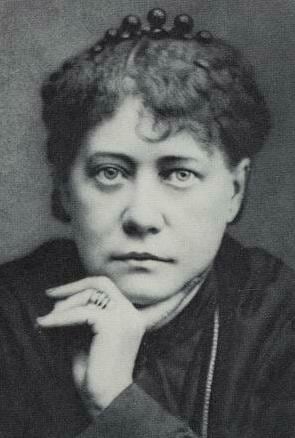
Blavatsky's major work and the founding text of modern Theosophy. It is presented as a commentary on the 'Stanzas of Dzyan', a cosmogonic poem the author claimed to have translated from a secret language and which no one else has seen. Volume I, 'Cosmogenesis', sets out the three fundamental propositions (an absolute and unknowable Principle, the universal law of periodicity, and the identity of all souls with the Universal Over-Soul) and the cyclical emanation of the cosmos. Volume II, 'Anthropogenesis', describes human evolution through seven 'root races' on vanished continents such as Lemuria and Atlantis. A third part engages with the science and religious symbolism of her day. Its readers have included Steiner, Yeats, Kandinsky, Scriabin and Mondrian.
What it is about
The Secret Doctrine, subtitled "The Synthesis of Science, Religion, and Philosophy", is Blavatsky's magnum opus and the founding text of Theosophy as a system. If Isis Unveiled had been a polemic, this book aims to be a complete cosmology: a history of the universe and of humankind from before the beginning of time to the present, told by way of a commentary.
The text commented upon is the "Stanzas of Dzyan", verses the author claimed to translate from an archaic manuscript written in a sacred language, Senzar, unknown to philology. No one else has seen that book, and scholars regard it as essentially Blavatsky's own composition drawing on Hindu, Buddhist, Kabbalistic and Gnostic sources; Theosophists hold it to be genuine. Either way, the stanzas have undeniable poetic force, and around each verse the author unfolds hundreds of pages of exegesis, comparative mythology and argument with the science of her day.
The first volume, "Cosmogenesis", starts from three fundamental propositions that the Proem states precisely: the existence of an absolute, eternal and unknowable Principle, of which nothing can be said; the universal law of periodicity, whereby universes appear and vanish in endless cycles like the ebb and flow of a tide; and the identity of every soul with the Universal Over-Soul, together with the obligatory pilgrimage of each spark through the cycles of incarnation according to the law of karma. From these follows the emanation of the cosmos in seven planes and seven principles.
The second volume, "Anthropogenesis", tells of human evolution through seven "root races", of which the present one would be the fifth, on vanished continents such as Hyperborea, Lemuria and Atlantis. This is the most contested part: it mixes myth and speculation with a nineteenth-century racial hierarchy later exploited by racist ideologues, something that cannot today be read without reservation.
The book's importance reaches far beyond its theses. It offered several generations an alternative both to Darwinian materialism and to Christian theology: a living, cyclical universe with a moral meaning, in which the human being shares in the divine. That vision shaped Rudolf Steiner, W. B. Yeats, Kandinsky and Mondrian, Scriabin, and, diffusely, the whole of twentieth-century esotericism. It is an immense, uneven and at times contradictory book, but without it modern spirituality cannot be understood.
Authorship note
Written between 1885 and 1888 in Würzburg, Ostend and London; revised by Bertram and Archibald Keightley. The 'third volume' of 1897 was compiled by Annie Besant from posthumous papers and its authenticity as a unified work is disputed.
Context of composition
Blavatsky began writing The Secret Doctrine in 1885, shortly after leaving India, at the lowest point of her reputation: that year the Society for Psychical Research published Richard Hodgson's report, which accused her of fraud over the phenomena at Adyar. Ill and isolated, she worked first in Würzburg, accompanied by Countess Constance Wachtmeister, then in Ostend and, from 1887, in London, where Archibald and Bertram Keightley put the enormous manuscript in order, divided it into volumes and corrected her English. The book was meant as both answer and vindication: to show that her teaching rested not on phenomena but on a coherent doctrine. It was published at the end of 1888 in London by the Theosophical Publishing Company, alongside the founding of the Esoteric Section, and addressed both members of the Society and the educated reader interested in comparative religion and in the crisis between science and faith.
Structure
- 01
Preface and Proem
The preface presents the work as fragments of a broader doctrine and states its purpose. The Proem, "Pages from a Pre-historic Record", describes the archaic manuscript of the stanzas and sets out the three fundamental propositions on which the whole system rests.
- 02
Vol. I, Part I: "Cosmic Evolution"
The seven cosmogonic stanzas of the Book of Dzyan, first in full and then verse by verse with commentary: the cosmic night, the awakening of the universe, the differentiation of substance, the creative hierarchies and the formation of worlds and of the Earth.
- 03
Vol. I, Parts II and III: symbolism and science
"The Evolution of Symbolism" studies the language of myths, the circle, the cross, the lotus, the world egg and the sacred numbers. The "Addenda" set the doctrine against the physics and chemistry of the day: ether, force, the atom and the nebular theory.
- 04
Vol. II, Part I: "Anthropogenesis"
Twelve stanzas on human origins and their commentary: the root races, from ethereal beings without physical bodies to present humanity; the separation of the sexes, the coming of mind, and the history of Lemuria and Atlantis.
- 05
Vol. II, Parts II and III: religious symbolism and science
"The Archaic Symbolism of the World-Religions" rereads original sin, the serpent, the fallen angels and the floods. The "Addenda" set Theosophical anthropogenesis against Darwinism and the geology of the day.
Main themes
The absolute Principle
At the root of everything lies a reality without attributes, prior to any personal god, about which "all speculation is impossible". Blavatsky calls it by many names — Parabrahman, Sat, the Rootless Root — and places it above the theologies. It is a radical apophaticism, akin to Vedanta and to negative theology, which excludes the creator God of Christianity.
Cycles and periodicity
Nothing begins or ends once and for all: universes, planets, races and souls arise and dissolve in rhythms of manifestation and rest, the manvantaras and pralayas of Hindu cosmology. This cyclical vision, opposed both to a single creation and to linear progress, is perhaps the book's most influential idea.
Karma and reincarnation
The third proposition makes each soul a spark of the Universal Soul that must pass through the cycles of incarnation until it gains individuality by its own merits. Here reincarnation, ambiguous in *Isis Unveiled*, is firmly established, and karma is presented as an impersonal moral law.
The root races
Theosophical anthropogenesis describes humanity as a succession of races on mythical continents. It was intended as a spiritual alternative to Darwinism, but its language of higher and lower races reproduces the prejudices of its age and was appropriated by Ariosophy and other racist movements. It is the aspect of the book that calls for the most reservation from today's reader.
The unity of symbols
As in *Isis*, but with more method, Blavatsky reads the world's myths as a common coded language: the serpent, the cosmic egg, the cross or the lotus would express in every culture the same truths about the cosmos and the soul. This hermeneutic anticipates, in non-academic form, interests later pursued by Jung, Eliade or Campbell.
Key passages
«The Eternal Parent, wrapped in her Ever-Invisible Robes, had slumbered once again for Seven Eternities.»
The Eternal Parent wrapped in her ever invisible robes had slumbered once again for seven eternities.
The first verse of the Stanzas of Dzyan describes the state before manifestation: space as a "parent" asleep in a cosmic night. Blavatsky makes it feminine with "her". The Spanish rendering is our own.
«Time was not, for it lay asleep in the Infinite Bosom of Duration.»
Time was not, for it lay asleep in the infinite bosom of duration.
The distinction between time (measured, successive) and duration (without parts) is central to the book's cosmology. The following verses list everything that "was not" in the cosmic night, in the manner of the Vedic creation hymn (Rigveda X.129).
«An Omnipresent, Eternal, Boundless, and Immutable PRINCIPLE on which all speculation is impossible, since it transcends the power of human conception and could only be dwarfed by any human expression or similitude.»
An Omnipresent, Eternal, Boundless, and Immutable PRINCIPLE on which all speculation is impossible, since it transcends the power of human conception and could only be dwarfed by any human expression or similitude.
The system's cornerstone. Everything the book says afterwards — planes, hierarchies, races — belongs to the manifested world; the Principle remains beyond any description, Theosophy's own included.
«The aim of this work may be thus stated: to show that Nature is not "a fortuitous concurrence of atoms," and to assign to man his rightful place in the scheme of the Universe.»
The aim of this work may be thus stated: to show that Nature is not "a fortuitous concurrence of atoms," and to assign to man his rightful place in the scheme of the Universe; to rescue from degradation the archaic truths which are the basis of all religions; to uncover, to some extent, the fundamental unity from which they all spring; finally, to show that the occult side of Nature has never been approached by the Science of modern civilization.
The book's programme in a sentence, against the atomistic materialism of its century. The original goes on to the other three aims: rescuing the archaic truths, uncovering the unity of religions and showing the limits of modern science.
Reception and influence
The first edition of 1888 sold quickly and was reprinted; its most famous review was written by Annie Besant for the Pall Mall Gazette in 1889, and reading it changed her life: shortly afterwards she joined the Theosophical Society. After Blavatsky's death, Besant and G. R. S. Mead prepared a "third and revised edition" (1893) with numerous corrections, and in 1897 Besant published a third volume from posthumous papers whose relation to the original project is disputed. Those interventions divided the movement: the branches loyal to the 1888 text, such as Pasadena or the United Lodge of Theosophists, reissued the facsimile, and Boris de Zirkoff prepared a critical edition in 1978.
Outside the movement the reception was twofold. Scholars pointed to the dependence on secondary sources — Wilson's translation of the Vishnu Purana, works by Alexander Winchell or Gerald Massey — and to the absence of any evidence for the Book of Dzyan. At the same time, artists and writers found in the book a cosmological imagination that institutional religion no longer offered: Yeats, Kandinsky, Mondrian, Scriabin and Steiner are direct debtors. Its root-race theory was reused by Austro-German Ariosophy, as Nicholas Goodrick-Clarke showed. It has been translated into some twenty languages; in Spanish several complete six-volume editions circulate (Kier, Sirio, Cárcamo).
How to read it
It is one of the most demanding works of modern esotericism. It is best to read *The Key to Theosophy* first, which supplies the vocabulary, and then to take the Proem slowly: the three propositions are the key to everything else. Next, the seven stanzas of the first volume read straight through, without commentary, like a poem; only then the commentary, verse by verse. Anthropogenesis can be left for last. The 1888 facsimile (Theosophical University Press) or Boris de Zirkoff's edition is preferable to the 1893 revision. There are good abridged editions, such as Michael Gomes's (Tarcher, 2009), useful for a first approach.
Editions and translations
Editions in your language first, without hiding the others. Each with its cover and its store.
English
Helena Blavatsky
The Secret Doctrine, vols. 1–4
The Conscious LibraryThe Secret Doctrine, vols. 1–4
Project Gutenberg, 2017
Edición de 1893–1897 en cuatro volúmenes: #54824, #54488, #56880, #61626.
Helena Blavatsky
The Secret Doctrine (abridged)
The Conscious LibraryThe Secret Doctrine (abridged)
Jeremy P. Tarcher/Penguin, Nueva York, 2009
ISBN 9781585427086
Edición abreviada e introducida por Michael Gomes.

The Secret Doctrine
Theosophical University Press, Pasadena, 1999
ISBN 9781557000019
Facsímil de la edición de 1888, 2 vols. en un tomo; también en rústica 9781557000026.
Helena Blavatsky
The Secret Doctrine
The Conscious LibraryThe Secret Doctrine
Theosophical University Press, Pasadena, 1977
ISBN 9780911500004
ISBN-10 0911500006 en Open Library.

The Secret Doctrine
Theosophical University Press, Pasadena, 1952
ISBN 9780911500011
Facsímil en 2 vols.
Helena Blavatsky
The Secret Doctrine
The Conscious LibraryThe Secret Doctrine
Theosophical Publishing Company, Londres, 1888
Primera edición, 2 vols. Digitalizada en Internet Archive (secretdoctrinesy01blav).
Português

A Doutrina Secreta
Editora Pensamento, São Paulo, 1980
ISBN 9788531501951
Edición en 6 vols.; el ISBN corresponde al vol. V en Open Library.
Français

La Doctrine secrète, tome 2
Éditions Adyar, París, 1994
ISBN 9782850000652
Edición en 6 tomos; tomo 3 9782850002151, tomo 4 9782850000232, tomo 5 9782850000072, tomo 6 9782850000669.

Abrégé de la Doctrine secrète
Éditions Adyar, París, 1996
ISBN 9782850001642
Español

La Doctrina Secreta, vol. 1
Luis Cárcamo editor, Madrid, 1996
ISBN 9788476271124
6 vols.: 9788476271131, 9788476271148, 9788476271155, 9788476271162, 9788476271179.
Helena Blavatsky
La doctrina secreta
The Conscious LibraryLa doctrina secreta
Berbera Editores, México, 2000
ISBN 9789685275217
Helena Blavatsky
La Doctrina Secreta (6 tomos)
The Conscious LibraryLa Doctrina Secreta (6 tomos)
Editorial Sirio, Málaga, 2004
ISBN 9788478080151

La Doctrina Secreta, vol. I: Cosmogénesis
Editorial Kier, Buenos Aires, 2005
ISBN 9789501711035
Edición en 6 vols.: vol. II 9789501711042, vol. III 9789501711059, vol. IV 9789501711066, vol. V 9789501711073, vol. VI 9789501711080.
Русский

Тайная доктрина
Эксмо, Moscú, 2012
ISBN 9785699170951
Otras ediciones rusas: АСТ/Сталкер 2005 (9785170136339); Sirin 1993 (9785857180112).
Further reading
- Isis Unveiled
The first, polemical and disorderly attempt at what here becomes a system.
- The Voice of the Silence
Published a year later, it comes, by the author's account, from the same series of texts as the Stanzas of Dzyan, but turns doctrine into ethics and practice.
- Annie Besant: An Autobiography
Its last chapter tells how reviewing this book led Besant to Blavatsky and to Theosophy.
- Heart Sutra
To contrast the apophaticism of the Theosophical Principle with Buddhist emptiness, which Blavatsky often invokes without quite distinguishing it.
Other works by Helena Blavatsky
- Isis Unveiled · 1877
- The Key to Theosophy · 1889
- The Voice of the Silence · 1889
- The Theosophical Glossary · 1892
- From the Caves and Jungles of Hindostan · 1879
- Nightmare Tales · 1892
- Studies in Occultism · 1895
- A Modern Panarion · 1895
- Collected Writings · 1950
- Esoteric Instructions · 1889
- Gems from the East · 1890
- Transactions of the Blavatsky Lodge · 1890
- The Letters of H. P. Blavatsky to A. P. Sinnett · 1925
- The Letters of H. P. Blavatsky, vol. 1 · 2003
- The Durbar in Lahore · 1881
- The Secret Doctrine, Volume III · 1897
- The People of the Blue Mountains · 1883
- Some Unpublished Letters of Helena Petrovna Blavatsky · 1929
- Five Messages to the American Theosophists · 1888
- The Original Programme of the Theosophical Society · 1931
- Practical Occultism · 1888
- Raja-Yoga, or Occultism · 1931
- Dynamics of the Psychic World · 1972
- Personal Memoirs of H. P. Blavatsky · 1937
- H. P. B. Speaks · 1950
- The Inner Group Teachings of H. P. Blavatsky · 1985
- The Esoteric Character of the Gospels · 1887
- Theosophical Articles · 1982
Sources
- Open Library, autora H. P. Blavatsky (OL2889852A): registros de obras y ediciones con ISBN consultados el 2026-10-22.
- H. P. Blavatsky, *The Secret Doctrine: The Synthesis of Science, Religion, and Philosophy*, 2 vols., Londres, The Theosophical Publishing Company, 1888 (facsímil Pasadena, Theosophical University Press, 1999).
- H. P. Blavatsky, *The Secret Doctrine*, 3.ª ed. revisada, ed. de Annie Besant y G. R. S. Mead, Londres, Theosophical Publishing Society, 1893–1897 (Project Gutenberg #54824, #54488, #56880, #61626).
- H. P. Blavatsky, *The Secret Doctrine*, ed. de Boris de Zirkoff, 3 vols., Adyar, Theosophical Publishing House, 1978.
- Countess Constance Wachtmeister, *Reminiscences of H. P. Blavatsky and The Secret Doctrine*, Londres, Theosophical Publishing Society, 1893.
- Nicholas Goodrick-Clarke, *Helena Blavatsky*, Berkeley, North Atlantic Books, 2004.
- Nicholas Goodrick-Clarke, *The Occult Roots of Nazism*, Wellingborough, Aquarian Press, 1985.
- Michael Gomes (ed.), *The Secret Doctrine* (edición abreviada), Nueva York, Tarcher/Penguin, 2009.
- Gary Lachman, *Madame Blavatsky: The Mother of Modern Spirituality*, Nueva York, Tarcher/Penguin, 2012.
Affiliate link: if you buy through it, the library may receive a commission at no extra cost to you. When an edition's real cover is not available, we show an illustrative library cover.