Attribuita a Empedocles
«The people of Acragas indulge in pleasure as if they were to die tomorrow, and build their houses as if they were to live for ever.»
Falsa attribuzione
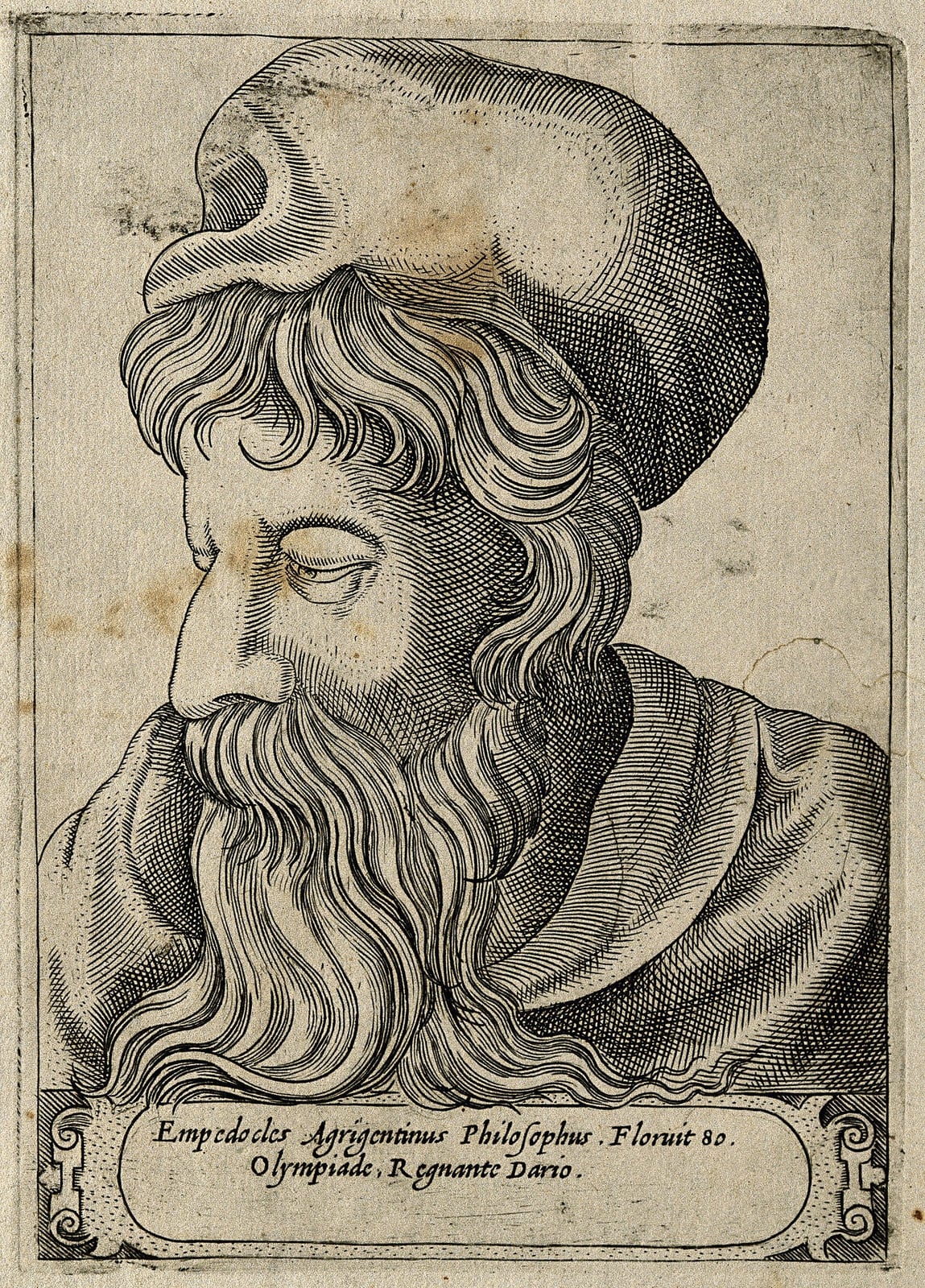
Verdetto
Non si trova nell'opera di Empedocles
Diogenes Laertius (VIII 63) puts it in Empedocles' mouth, but Aelian (Varia Historia XII 29) ascribes an almost identical saying to Plato. It is a wandering apophthegm with no secure source.
Ciò che ha detto davvero
Parole verificate di Empedocles
«For straitened are the powers that are spread over their bodily parts.»
DK 31 B2.1, en Sexto Empírico, Contra los matemáticos VII 123. Griego: texto de Fairbanks (1898), basado en la edición de Stein; numeración Diels-Kranz. Inglés: John Burnet, Early Greek Philosophy (1908). Español: traducción propia.
«Hear first the four roots of all things: shining Zeus, life-bringing Hera, Aidoneus, and Nestis whose tear-drops are a well-spring to mortals.»
DK 31 B6, en Aecio I 3, 20, y Diógenes Laercio VIII 76 (DK lee τέσσαρα γὰρ πάντων). Griego: texto de Fairbanks (1898), basado en la edición de Stein; numeración Diels-Kranz. Inglés: John Burnet, Early Greek Philosophy (1908). Español: traducción propia.
«And I shall tell thee another thing. There is no coming into being of aught that perishes, nor any end for it in baneful death; but only mingling and change of what has been mingled. Coming into being is but a name given to these by men.»
DK 31 B8, en Plutarco, Contra Colotes 1111f, y Aecio I 30, 1. Griego: texto de Fairbanks (1898), basado en la edición de Stein; numeración Diels-Kranz. Inglés: John Burnet, Early Greek Philosophy (1908). Español: traducción propia.