Bodhidharma के नाम से प्रचलित
«A special transmission outside the scriptures, not relying on words and letters, pointing directly to the human mind, seeing one's nature and becoming a buddha.»
ग़लत श्रेय
निष्कर्ष
यह Bodhidharma की रचनाओं में नहीं है
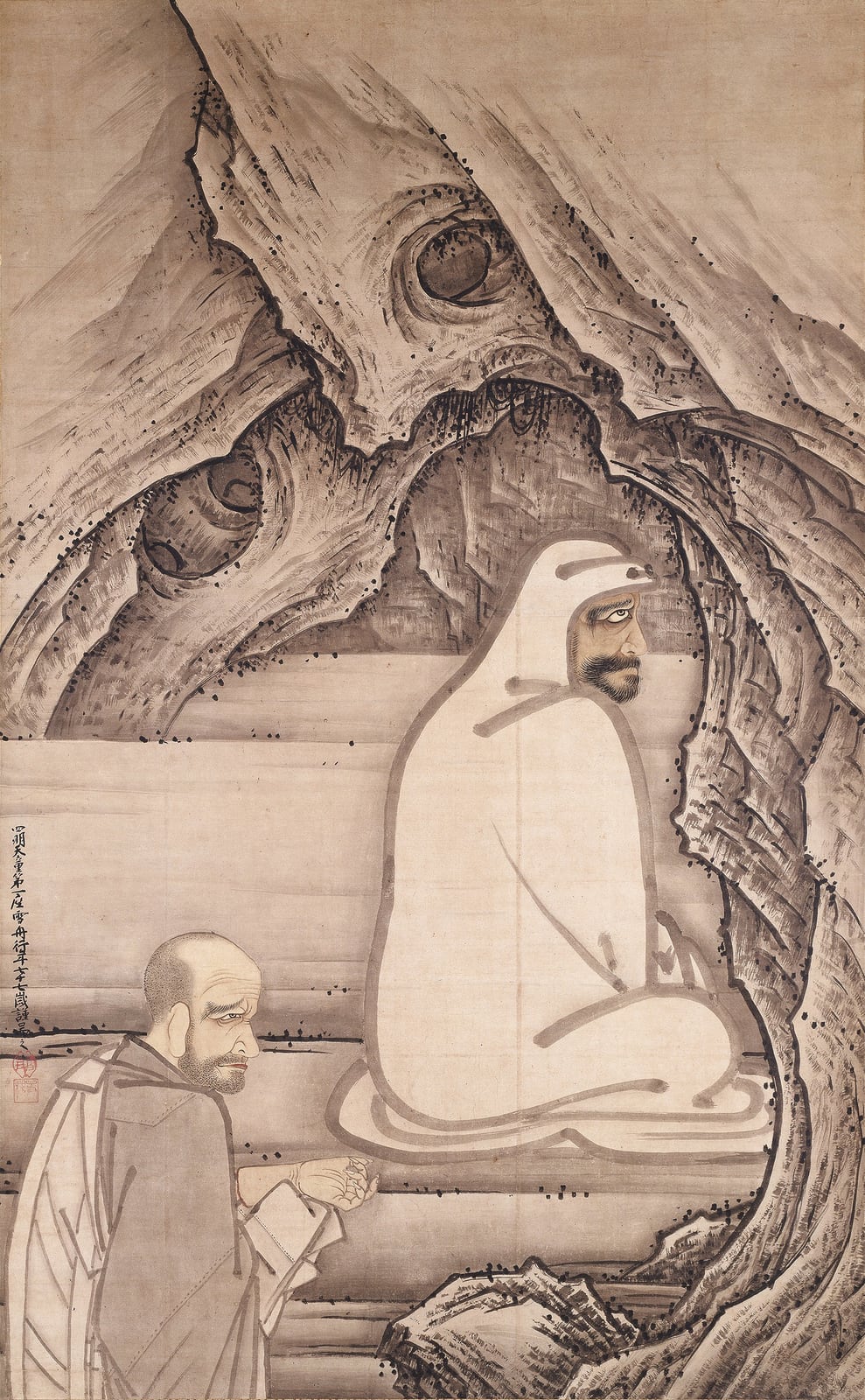
A four-line formula (教外別傳,不立文字,直指人心,見性成佛) that tradition attributes to Bodhidharma. Its elements appear in Chan texts of the ninth and tenth centuries and the complete formula took shape in the Song period (eleventh–twelfth centuries); it is found in no sixth- or seventh-century source.
स्रोत: McRae, John R. Seeing Through Zen: Encounter, Transformation, and Genealogy in Chinese Chan Buddhism. Berkeley: University of California Press, 2003. ISBN 9780520237988.
जो उन्होंने वास्तव में कहा
Bodhidharma के प्रमाणित वचन
«There are many paths for entering the Way, but in essence they are no more than two: entrance by principle and entrance by practice.»
Tratado de las dos entradas y las cuatro prácticas, inicio (texto del Xinzuan Xu zangjing en Wikisource; traducción del investigador)
«To believe deeply that all living beings share one and the same true nature, which does not appear only because it is covered by adventitious dust and deluded thoughts. If one abandons the false and returns to the true, abiding firmly in wall contemplation, with neither self nor other, ordinary and holy alike, unmoving and no longer following the letter of the teachings, then one silently accords with the principle.»
Tratado de las dos entradas, «entrada por el principio»
«Gain and loss depend on conditions; the mind neither grows nor wanes, the wind of joy does not move it, and silently it accords with the Way.»
Tratado de las dos entradas, segunda práctica («adaptarse a las circunstancias»)