
Traditional attribution
Yogabhāṣya (Commentary on the Yogasūtras)
योगभाष्य (Yogabhāṣya), también व्यासभाष्य
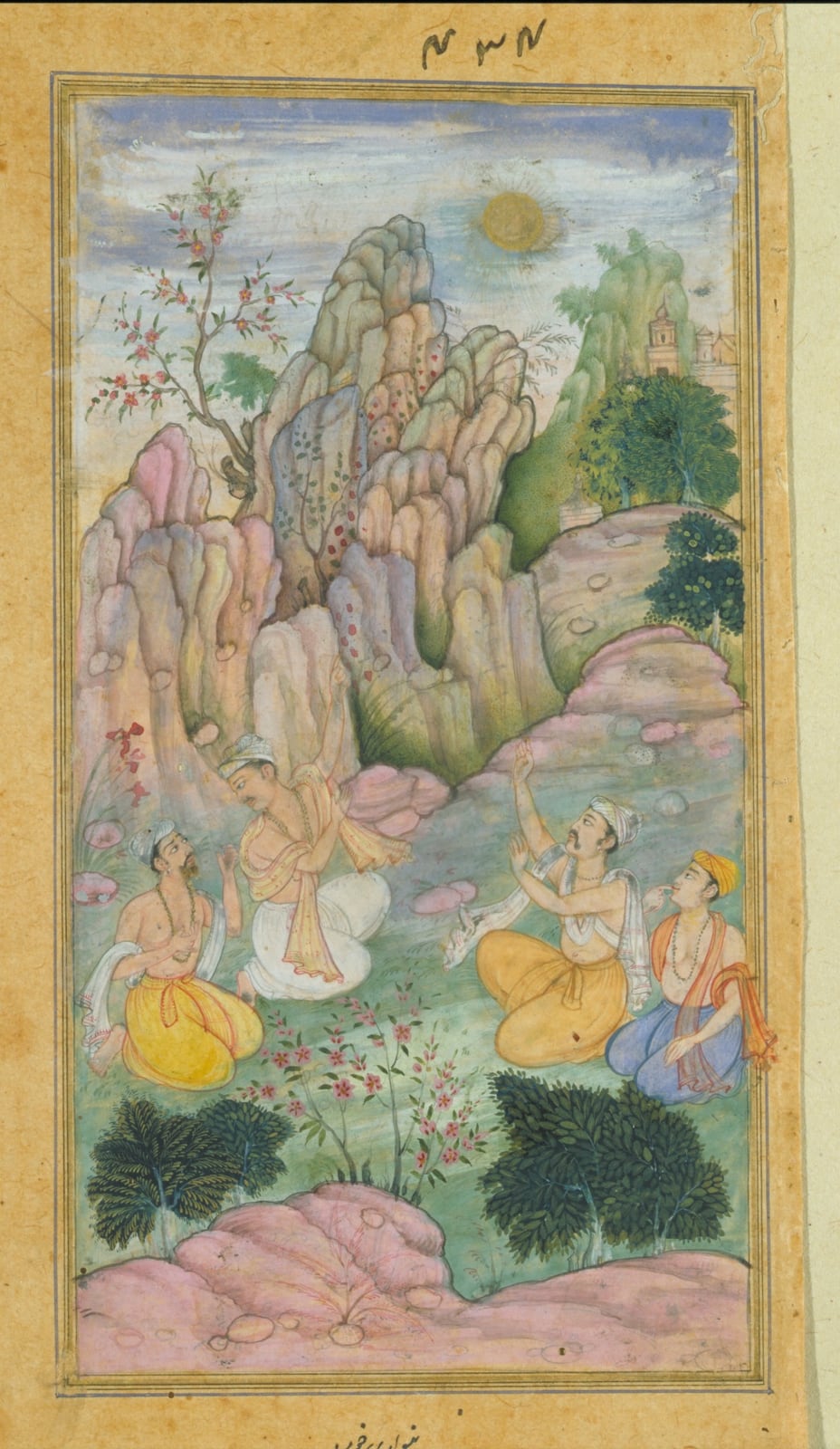
The oldest and most authoritative commentary on the Yogasūtras, explaining their aphorisms, defining the states of the mind and the stages of concentration and fixing the classical doctrine of yoga. All later exegesis of the Yogasūtras was done through this text, which tradition simply calls 'Vyāsa's commentary'.
No edition of this work is currently on sale in a store we have been able to verify.
Authorship note
Ascribed to Vyāsa by medieval tradition (Vācaspati Miśra and later commentators). Maas and Bronkhorst maintain that aphorisms and commentary form a single work by Patañjali, the Pātañjalayogaśāstra (c. 325–425); the attribution to Vyāsa is now regarded as disputed.
Editions and translations
Editions in your language first, without hiding the others. Each with its cover and its store.
English

Yoga Philosophy of Patañjali, containing his Yoga Aphorisms with Vyāsa's Commentary
State University of New York Press, 1983
Translation: Swāmi Hariharānanda Āraṇya; trad. inglesa de P. N. Mukerji
ISBN 9780873957298
Vyasa
The Yoga-System of Patañjali (Harvard Oriental Series 17)
The Conscious LibraryThe Yoga-System of Patañjali (Harvard Oriental Series 17)
Harvard University Press, 1914
Translation: James Haughton Woods
Dominio público. Reimpresión South Asia Books, 1998: ISBN 9788120805705.
Other works by Vyasa
- Mahābhārata · 400
- Mahābhārata I: Ādiparvan (The Book of the Beginning)
- Mahābhārata II: Sabhāparvan (The Book of the Assembly)
- Mahābhārata III: Āraṇyakaparvan (The Book of the Forest)
- Mahābhārata IV: Virāṭaparvan (The Book of Virāṭa)
- Mahābhārata V: Udyogaparvan (The Book of the Effort)
- Mahābhārata VI: Bhīṣmaparvan (The Book of Bhīṣma)
- Mahābhārata VII: Droṇaparvan (The Book of Droṇa)
- Mahābhārata VIII: Karṇaparvan (The Book of Karṇa)
- Mahābhārata IX: Śalyaparvan (The Book of Śalya)
- Mahābhārata X: Sauptikaparvan (The Book of the Night Raid)
- Mahābhārata XI: Strīparvan (The Book of the Women)
- Mahābhārata XII: Śāntiparvan (The Book of Peace)
- Mahābhārata XIII: Anuśāsanaparvan (The Book of Instruction)
- Mahābhārata XIV: Āśvamedhikaparvan (The Book of the Horse Sacrifice)
- Mahābhārata XV: Āśramavāsikaparvan (The Book of the Hermitage)
- Mahābhārata XVI: Mausalaparvan (The Book of the Clubs)
- Mahābhārata XVII: Mahāprasthānikaparvan (The Book of the Great Journey)
- Mahābhārata XVIII: Svargārohaṇaparvan (The Book of the Ascent to Heaven)
- Harivaṃśa (The Lineage of Hari)
- Bhagavad Gītā (The Song of the Lord) · 200
- The division of the Veda into four collections (traditional attribution)
- The eighteen great Purāṇas (traditional attribution) · 300
- Bhāgavata Purāṇa · 900
- Viṣṇu Purāṇa
- Devī Bhāgavata Purāṇa
- Adhyātma Rāmāyaṇa
- Brahmasūtras (Aphorisms on Brahman) · 400
- Vyāsa Smṛti
Sources
- Maas, Philipp A. «A Concise Historiography of Classical Yoga Philosophy». En Eli Franco (ed.), Periodization and Historiography of Indian Philosophy. Viena: Sammlung de Nobili, 2013, pp. 53–90.
Affiliate link: if you buy through it, the library may receive a commission at no extra cost to you. When an edition's real cover is not available, we show an illustrative library cover.