Attribuita a Pythagoras
«All is number.»
Falsa attribuzione
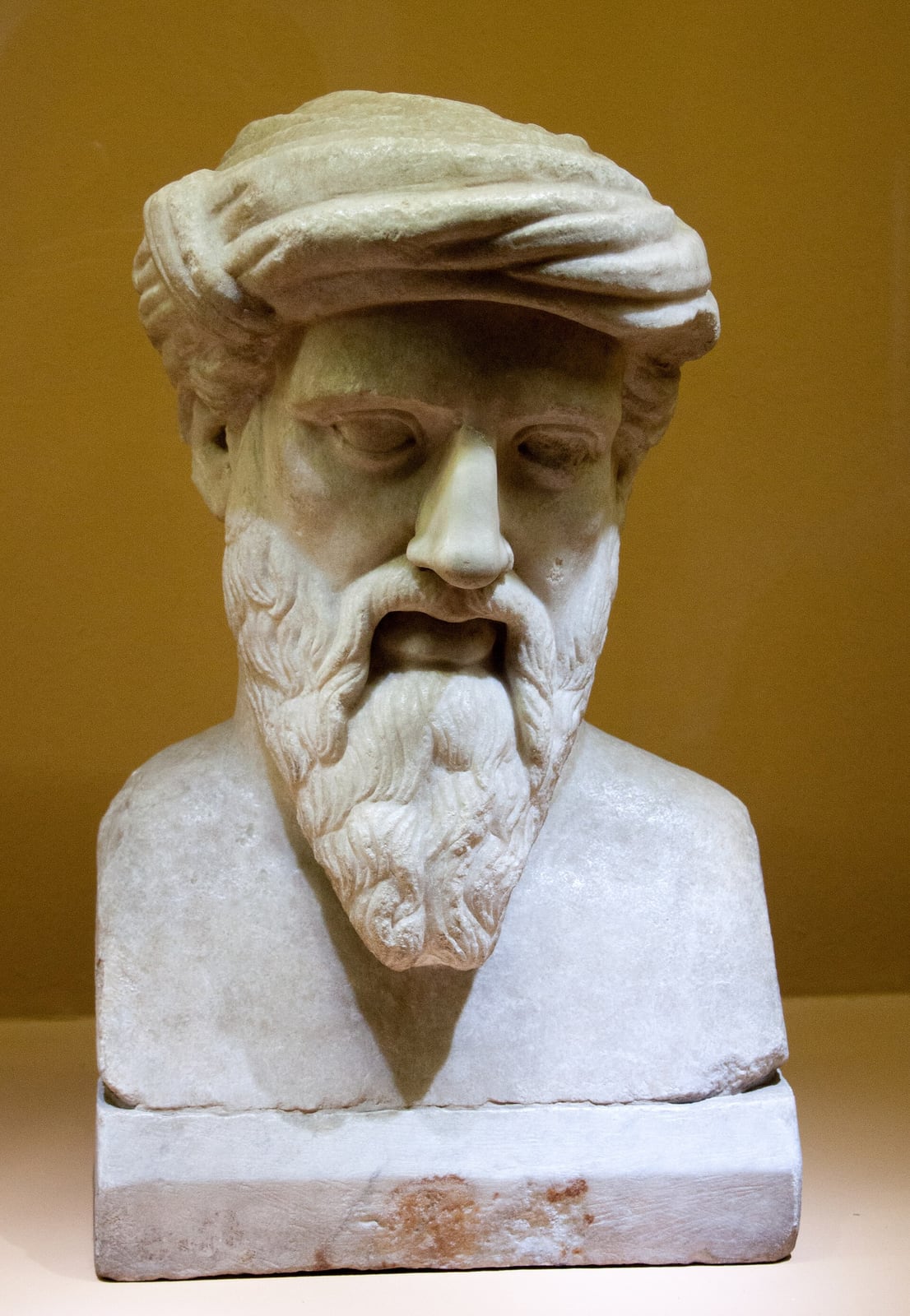
Verdetto
Non si trova nell'opera di Pythagoras
The formula appears in no ancient source as a saying of Pythagoras. It summarises Aristotle's account of the doctrine of "the so-called Pythagoreans" (Metaphysics A 5–6), according to which things are numbers or imitate numbers; the thesis probably comes from Philolaus, not from the founder.
Ciò che ha detto davvero
Parole verificate di Pythagoras
«Stop, do not beat it: it is the soul of a friend; I recognised it when I heard its voice.»
Jenófanes, fragmento DK 21 B 7, transmitido por Diógenes Laercio VIII 36. Son palabras que Jenófanes, contemporáneo de Pitágoras, le atribuye en tono satírico; traducciones propias.
«He was the first, according to Timaeus, to say that the possessions of friends are common and that friendship is equality.»
Diógenes Laercio VIII 10, citando al historiador Timeo de Tauromenio (s. IV–III a. C.). Atribución tradicional; traducciones propias.
«What is wisest? Number; and second, the one who gave things their names.»
Acúsma pitagórico transmitido por Jámblico, Vida pitagórica 82 (y Cicerón, Tusculanas I 25.62). Sentencia de la tradición oral pitagórica; no puede asegurarse que sea del propio Pitágoras. Traducciones propias.