تُنسب إلى Pythagoras
«As long as man continues to be the ruthless destroyer of lower living beings, he will never know health or peace.»
نسبة خاطئة
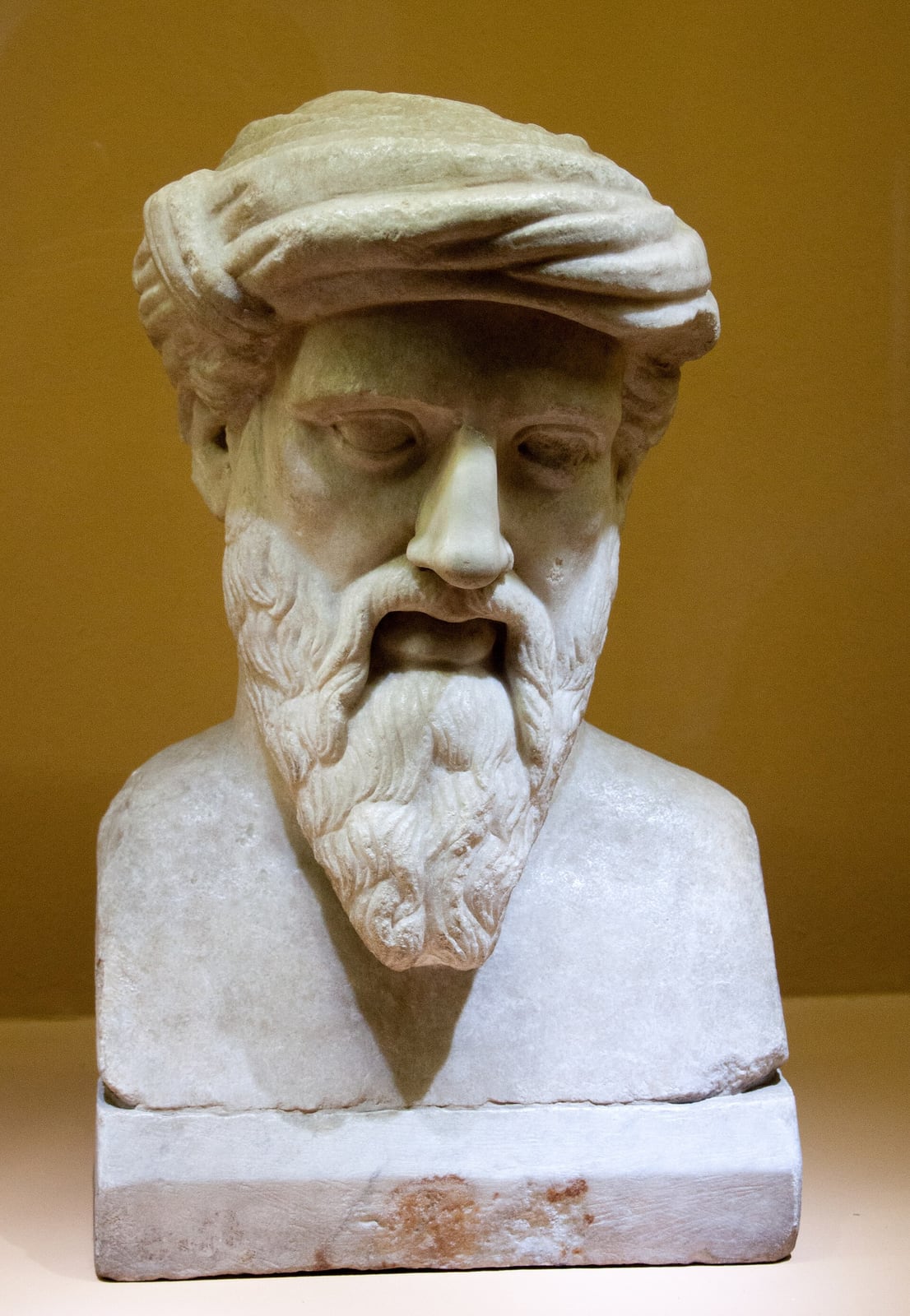
الحكم
ليست في أعمال Pythagoras
A modern quotation spread in vegetarian circles. The idea of kinship among all living beings is indeed Pythagorean (Porphyry, Life of Pythagoras 19), and Ovid puts a long plea against eating meat in Pythagoras' mouth (Metamorphoses XV 60–478), but this sentence is in no ancient text.
ما قاله حقًّا
كلمات موثّقة لـPythagoras
«Stop, do not beat it: it is the soul of a friend; I recognised it when I heard its voice.»
Jenófanes, fragmento DK 21 B 7, transmitido por Diógenes Laercio VIII 36. Son palabras que Jenófanes, contemporáneo de Pitágoras, le atribuye en tono satírico; traducciones propias.
«He was the first, according to Timaeus, to say that the possessions of friends are common and that friendship is equality.»
Diógenes Laercio VIII 10, citando al historiador Timeo de Tauromenio (s. IV–III a. C.). Atribución tradicional; traducciones propias.
«What is wisest? Number; and second, the one who gave things their names.»
Acúsma pitagórico transmitido por Jámblico, Vida pitagórica 82 (y Cicerón, Tusculanas I 25.62). Sentencia de la tradición oral pitagórica; no puede asegurarse que sea del propio Pitágoras. Traducciones propias.